seating chart
Wedding Seating Chart Ideas That Actually Work
Wedding Seating Chart Ideas That Actually Work
Most brides spend more time worrying about the seating chart than any other single wedding detail.
That is the problem. Not the seating chart itself — the worrying.
The decisions are not as complicated as they feel. There is a process, there are display ideas that genuinely work, and there are a handful of small choices that make the whole thing run smoothly on the day. Let's cut through the noise and get to the part that actually matters.
Start With the Floor Plan, Not the Guest List
Here is the move most brides skip: map your reception layout before you start thinking about who sits where.
Get the floor plan from your venue — or ask your caterer what table configuration they are using. Know how many tables you have, what shape they are, how many guests each one holds, and where the dance floor, head table, and bar are located.
This is your canvas. Once you can see the whole room, the guest assignments become much more logical. You are not just assigning names to a table number — you are placing people in a physical space. Grandma near the entrance, not in the back corner. The couple's college friends near the dance floor. The family with young kids near the exit so leaving early is easy.
Draw it out, even roughly. That single step saves hours of back-and-forth.
Table Shape Ideas and How They Change Seating
The shape of your tables affects more than just aesthetics. It changes how guests interact and how many people you can seat comfortably.
Round tables are the most common for good reason. Everyone at the table faces each other. Conversation flows naturally around the whole group, not just between the people sitting side by side. Standard rounds seat 8–10 guests comfortably.
Long banquet or farm tables have become increasingly popular for both indoor and outdoor receptions. They create a communal, dinner-party atmosphere and look beautiful in photos — especially outdoors. The tradeoff: guests at the ends of a long table may not interact much with guests at the opposite end.
Sweetheart table — just the two of you at your own table, surrounded by everyone else. This keeps the couple from being monopolized by one side of the room during dinner and allows them to move freely and visit other tables.
A mix of round and long tables works well for couples who want the visual interest of farm tables without committing entirely to the style. Long tables for the wedding party, rounds for family and friends is a common and practical combination.
How to Group Your Guests (The Part Everyone Overthinks)
Before you assign anyone to a specific table, group your guests by relationship. This step makes the actual assignment go much faster.
Start with your obvious clusters:
- Immediate family (each side)
- Extended family (each side)
- College friends
- Childhood friends
- Work colleagues
- Neighbors or community connections
- Vendors or professional guests, if applicable
Once you have clusters, assign the cluster to a table — not individual names to tables. Fill the table with a complete group where possible. Mixed tables are fine when clusters do not divide evenly. Just avoid splitting a tight-knit group of six across three different tables.
A few specific situations worth addressing:
Divorced parents. They do not need to be at the same table. Give each their own table with the people who are closest to them. Comfortable is the goal.
The "wild card" guests. People who do not fit neatly into any cluster — the distant cousin you have not seen in ten years, the coworker who does not know anyone else. Group these guests together at one table. Wild card tables consistently end up being the most fun at the reception.
Young children. Give families with young kids their own table, positioned near an exit. It makes leaving quietly easier and keeps the chaos contained — which parents will genuinely appreciate.
Elderly guests. Seat them near the front, away from speakers, with easy access to the restrooms and the exit. Small consideration, real impact.
Seating Chart Display Ideas
The seating chart board is the physical version of all your planning — the display guests see when they walk into the reception. Here are the formats that work well.
Foam board on an easel is the most practical and popular option. It is lightweight, customizable, and easy to transport to any venue. Custom printed versions arrive ready to display. Howard Wedding Rentals prints foam boards designed to match your wedding.
Mirror with vinyl lettering. A leaning mirror etched with table assignments is glamorous and photographs beautifully. Heavy, so plan your display surface ahead of time.
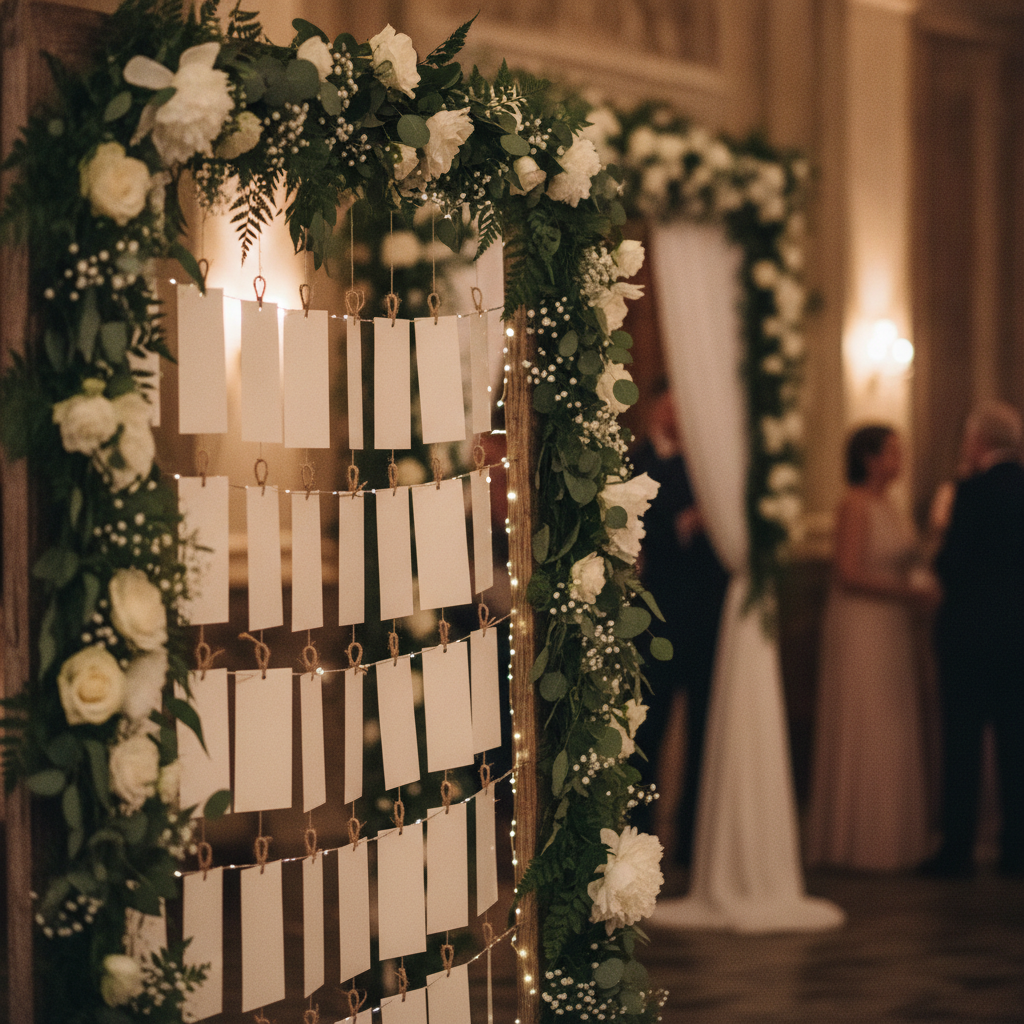
Escort card wall or tree. Instead of a single board, hang individual escort cards — one per guest — from a decorative structure: a wooden frame, a branch installation, a hanging wire grid. Guests find their name and take the card to their table.
Framed poster print on an easel. A high-quality paper print in a substantial frame looks polished and classic. Sizing matters — go larger than you think you need.
Floral installation with hanging name cards. A floral arch or suspended greenery piece with individual name tags tied to it works beautifully for garden weddings. Labor-intensive to create, stunning in photos.
Chalkboard. Ideal for rustic, boho, and barn weddings. Hand-lettering takes hours; chalkboard vinyl with a printed overlay gets the look more efficiently.
Plan Digitally Before Committing to a Physical Display
The single most practical thing you can do: do not order or design the physical display until your seating assignments are completely locked.
Use a digital tool during the planning phase. Our free seating chart tool lets you build out your full table layout, drag guests between tables as things change, and export a final alphabetical list when everything is confirmed. No spreadsheet juggling required.
Once the list is final, send it to your printer or designer. Trying to finalize a physical display while assignments are still shifting is how brides end up reprinting at Staples at 10 PM the night before the wedding.
Your action: Build your layout digitally first. Lock assignments. Then — and only then — order the board.
Wedding Floor Plan Ideas for the Layout Itself
A few things worth knowing about reception floor plan design:
The wedding floor plan matters as much as the seating chart. Where you put the dance floor relative to the head table, where the bar falls, how far the furthest table is from the exit — all of this affects how the evening actually flows.
Rectangle wedding table layout plans can be drawn to scale using a simple online floor planning tool or even graph paper. Most venues will give you the room dimensions. The goal is to ensure there is enough aisle space between tables for servers and guests to move comfortably.
Leave at least 60 inches between table edges to allow for comfortable seating, chair movement, and server access. Cramped receptions feel cramped immediately.
Common Mistakes to Avoid
Starting too early. Seating charts built more than three weeks out almost always need to be rebuilt. Wait until RSVPs close.
Assigning individual seats within tables. Unless you have very specific reasons, assigning tables is enough. Assigning exact chairs adds coordination complexity with no meaningful benefit.
Underestimating the kids table. Do not put it in the back corner like an afterthought. Kids get restless. Their parents need to be able to get to them quickly. Near the entrance, near an exit.
Ignoring the acoustic situation. If your venue has a live band or loud speakers, the guests nearest those speakers will have a harder time having a conversation. Seat guests who would struggle with volume — elderly relatives, young children, hearing-impaired guests — further from the source.
FAQ
Do I need both a seating chart board and individual escort cards? No — they solve the same problem in different ways. A seating chart board lists all guests in one place at the entrance. Escort cards are individual cards guests pick up and carry to their table. Choose one format. Most couples use the board; it is easier to produce and easier for guests to read quickly.
What if I do not want assigned seating at all? Open seating is an option, but it tends to create a scramble when guests arrive simultaneously and a lopsided room once the popular tables fill up. If you want a relaxed feel without the scramble, assigned tables (not seats) are the middle ground — guests have a home base but can arrange themselves within the table.
How close should the head table be to the dance floor? The head table works best adjacent to — not on — the dance floor, with a direct sightline to the band or DJ. Close enough for the couple to step onto the floor easily, far enough that conversation is possible during dinner.
The seating chart is not the part of your wedding that will go wrong if you plan it carefully. It is the part that gets done, crossed off, and forgotten — in the best possible way.
Build your layout and assign your guests with the free seating chart tool. When you are ready to print the display, we have custom foam boards ready to go. And if you have questions about any of it, we are here.