seating chart
Wedding Seating Chart Board Ideas (and How to Get Yours Done)
Wedding Seating Chart Board Ideas (and How to Get Yours Done)
Somewhere between choosing your centerpieces and tracking down RSVPs, the seating chart board got pushed to the bottom of the list.
Take a deep breath. You are not behind.
The wedding seating chart board is one of the last things brides tend to plan — and one of the first things guests actually see at your reception. It sits at the entrance, tells a hundred-plus people exactly where to go, and quietly prevents the cocktail-hour chaos of guests wandering around with drinks and no idea where to sit.
The good news? This one is manageable. You have options — from a simple foam board ordered online to a full-length mirror etched with your table assignments. Here is how to pick what works for your wedding and get it done.
What Is a Wedding Seating Chart Board?
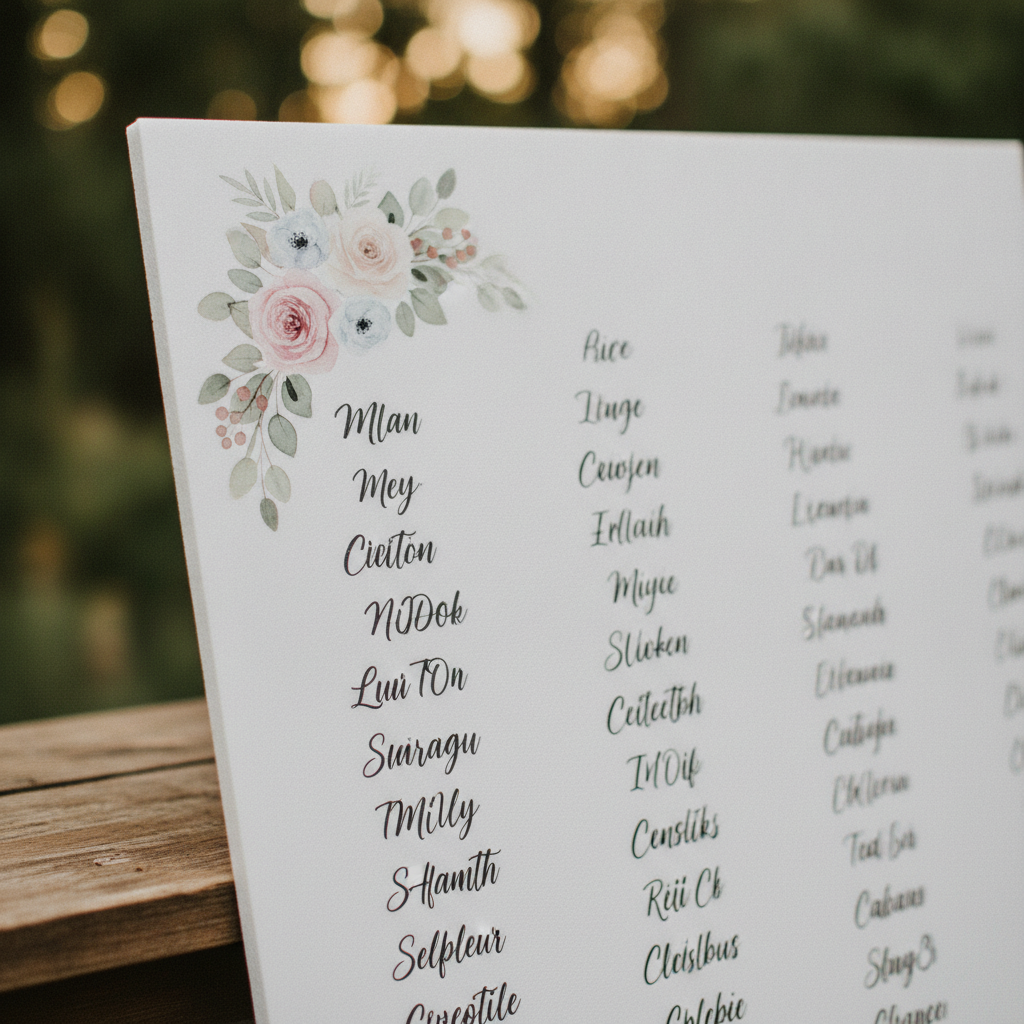
A wedding seating chart board is a physical display — usually placed on an easel near the reception entrance — that shows guests their assigned table. Think of it as the printed version of all that planning you have already done in your spreadsheet or seating tool.
Most couples list guests alphabetically by last name, with a table number next to each name. Guests walk up, find their name in about five seconds, and head to their table. No hunting down the bride. No awkward hovering.
It is a small detail, but it does real work. It keeps your cocktail hour moving, signals that you have thought through every guest's experience, and doubles as a piece of décor at the entrance to your reception.
The Most Popular Display Styles
Here is where it gets interesting. The seating chart board comes in more formats than most brides realize. Let's cut through the options so you can pick one and move on.
Foam Board
This is the most practical choice — and the most popular for good reason.
A foam board seating chart is lightweight, easy to transport, and works with any wedding aesthetic when you customize the design. You can go minimalist with black text on white, or add florals, greenery, and script fonts. It is also the easiest format to order: submit your guest list and design preferences, and it arrives ready to display on an easel.
If you are working with a real budget and want a polished result without the craft-project stress, this is your move.
Acrylic or Lucite
Acrylic boards have a clean, modern look that photographs well. Gold or white ink on clear acrylic is a popular combination for contemporary or minimalist weddings. They are heavier than foam, so confirm your easel can support the weight before you commit.
Acrylic typically costs more than foam board. But if your aesthetic leans modern, it is worth considering.
Mirror
A leaning mirror with vinyl lettering or a printed acrylic overlay is one of the most dramatic seating chart displays available. It is glamorous, it photographs beautifully, and it suits black-tie and garden weddings equally well.
Here is the truth: mirrors are heavy. Make sure your venue has a wall or a heavy-duty stand to lean it against. Work out that logistics detail before you commit to the style.
Framed Poster Print on Easel
This is the classic option. Print your seating chart on quality paper, frame it, and set it on an easel. Simple and elegant. The frame adds a finished look that foam or acrylic sometimes lacks.
The key is sizing — the frame and print need to be large enough for guests to read comfortably at a distance. More on that below.
Chalkboard
Rustic, boho, and barn wedding couples love a chalkboard seating chart. If you or someone in your family has beautiful handwriting, hand-lettering can look stunning.
But remember: hand-lettering a full seating chart takes hours. A more practical version uses chalkboard vinyl sheeting with a printed design layered on top. You get the aesthetic without the calligraphy commitment.
DIY vs. Custom Printed — What's Actually Worth It?
Here is the honest breakdown.
DIY path: Design in Canva, export to PDF, take it to a print shop, pick it up, mount it yourself. Total cost is usually lower. But the time investment is real — especially if you discover a sizing issue at the copy center a week before your wedding, or if table assignments change (they will change) and you need to reprint.
Custom printed path: You submit your guest list and design details. It comes back printed, mounted, and ready to display. You do not spend a Tuesday evening cutting foam board.
Decision fatigue is real, and the week before your wedding is not the time to add a craft project. For most couples, the custom printed option is worth the extra cost — not because DIY cannot look great, but because your time and mental energy in that final week are worth protecting.
Howard Wedding Rentals prints custom seating chart foam boards sized and designed for your wedding. No design degree required.
Assign Your Seats Before You Print Anything
This sounds obvious, but it is worth saying clearly: you cannot finalize your seating chart board until the seating itself is locked in.
Before anything goes to a printer, you need:
- A confirmed guest list with RSVPs closed
- Table assignments for every guest
- Finalized table names or numbers
If that is not done yet, start there. Our free seating chart tool lets you drag and drop guests into tables, adjust the layout, and export a clean, print-ready list. It is free, and it removes the spreadsheet chaos that makes this step feel harder than it is.
Once your assignments are final, you are ready to design or order.
Your action: Open the seating chart tool, finalize your tables, and export your guest list. That one step unblocks everything else.
Size, Layout, and Small Details That Make a Big Difference
A few decisions that brides often leave too late:
What Size Should Your Board Be?
As a general guide:
- 18 × 24 inches — works for weddings up to about 80 guests
- 24 × 36 inches — the sweet spot for 100–150 guests
- 36 × 48 inches — use this for larger weddings, or if you want the display to feel substantial
When in doubt, go larger. Guests should not have to step in close to read the names.
Alphabetical or by Table?
List guests alphabetically by last name. Every time.
Sorted by table sounds logical until you remember that guests do not know their table number when they walk in. Alphabetical takes five seconds to scan. Sorted by table means reading through every list until you find your name — which is not what anyone wants at cocktail hour.
Font Size
For guest names, use a minimum of 12–14 point type at the printed size. If the board is large (36 × 48), bump up to 16pt. Your guests' parents will thank you.
Seat Numbers vs. Table Numbers Only
For most receptions, listing just the table number is enough. Assigning specific seats within a table adds a layer of coordination that is rarely necessary unless you have a head table or very structured formal seating requirements.
FAQ
What size should a wedding seating chart board be? For most weddings, 24 × 36 inches is the sweet spot — large enough to read easily, manageable to transport. Go up to 36 × 48 for more than 150 guests or if you want the display to feel more prominent at the entrance.
Should I list guests alphabetically or by table number? Alphabetically by last name, always. Every guest knows their own name. Not every guest knows their table number when they arrive. Alphabetical is faster and less frustrating for everyone.
How far in advance should I order my seating chart board? Order at least two to three weeks before your wedding. That gives you time for reprints if table assignments change — and they usually do. Confirm the turnaround time with your vendor when you order.
Your seating chart board is one of the last pieces to finalize and one of the easiest to get right when you have a clear plan.
Finalize your seating with our free drag-and-drop seating chart tool, then order your custom printed foam board from Howard Wedding Rentals. We handle the printing so you can focus on everything else.
Questions about sizing, timing, or design? Reach out any time — we are glad to help.