place cards
Wedding Place Cards: Names, Table Numbers, and What to Order
Wedding Place Cards: Names, Table Numbers, and What to Order
Place cards are one of the last wedding details most brides think about — and one of the first things guests interact with at the reception.
That small card on a plate or in a holder tells a guest they are expected, they belong at this table, and someone thought about where they would be most comfortable. That is a lot of work for a 3×4 inch piece of paper.
The good news: this is one of the most straightforward decisions in the whole planning process. Here is exactly what you need to know.
What Are Wedding Place Cards?
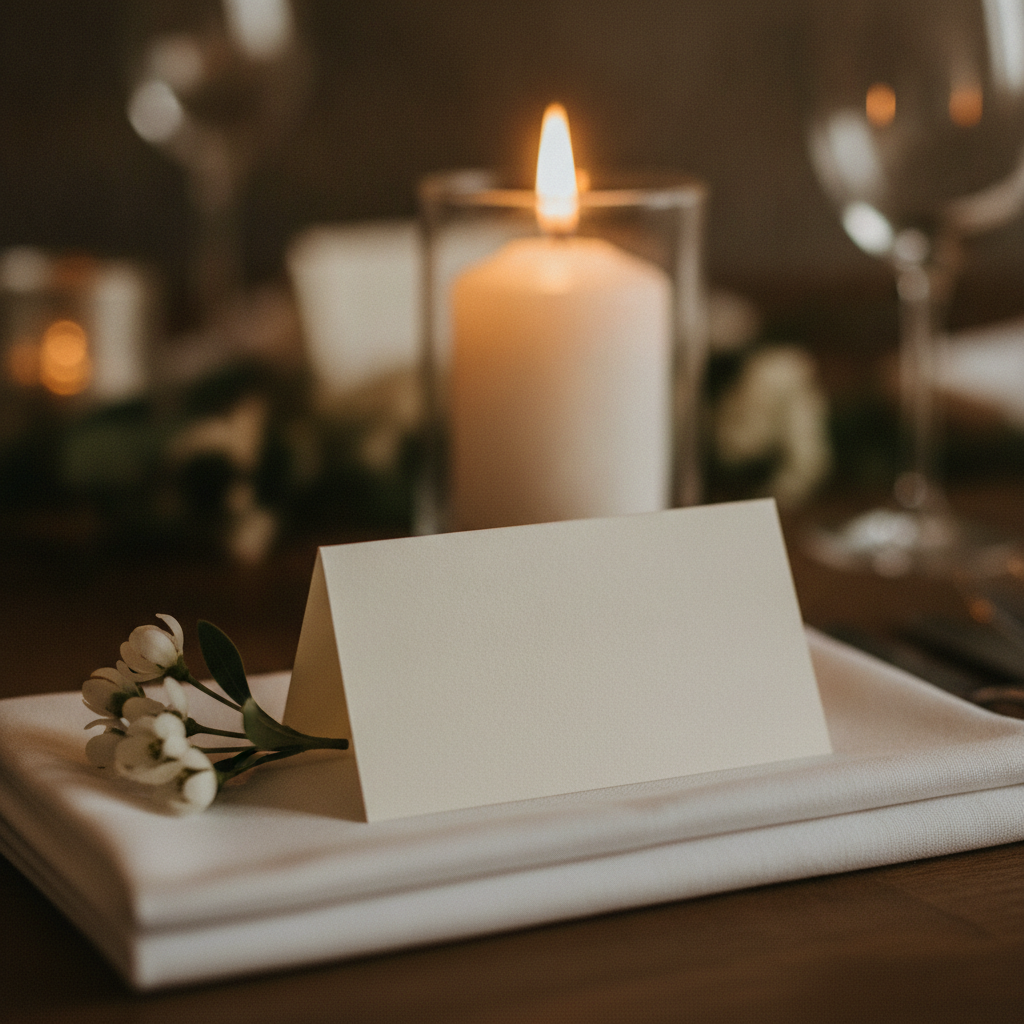
A wedding place card is a small card placed at each individual seat at the reception tables. It shows the guest's name — and sometimes their table number or a meal selection indicator — so they know exactly where to sit once they find their table.
Place cards work alongside (or instead of) a seating chart display at the reception entrance. Here is how the two fit together:
The seating chart board at the entrance tells guests which table they are at. The place card at the seat tells guests which specific chair is theirs.
Some couples use both. Some use only a seating chart board and let guests arrange themselves within the table. Individual place cards make the most sense when you need to manage specific seating within a table — for the head table, for a table with specific dietary needs, or for a formal plated dinner where the caterer needs to know who ordered what.
What to Write on a Wedding Place Card
Less is more. Here is what actually needs to appear on the card:
The guest's name. Use first and last name for most guests — it removes any ambiguity when multiple people at a table have the same first name. For formal or black-tie weddings, titles are appropriate: Mr. and Mrs. Johnston, Dr. Patel. For casual weddings, first names alone work fine.
Table number or table name. If you are using table numbers, include the number on the place card so guests have a reference point at the table. If you are using table names (a theme-based naming system rather than numbers), include the name. Skip this if guests already found their table from the seating chart board.
Meal selection indicator (if applicable). For plated dinners with multiple entrée options, a small symbol or initial on the card tells the server what was ordered. A small colored dot, a tiny icon, or a letter in the corner is all you need. Your caterer will tell you what system they prefer.
That is the complete list. Do not overcrowd the card with ceremony programs, thank-you messages, or QR codes. A place card has one job.
Table Place Card Styles That Work
The format you choose should match your wedding's overall aesthetic.
Tented card. The classic. A rectangular card folded in half — it stands on its own without a holder. Clean, simple, and works with any table setting. Available in every paper weight and finish.
Flat card with a holder. A flat card displayed in a small acrylic, metal, or wooden holder. More polished than a tented card. The holders add cost and complexity (you need one per guest), but the look is sharp.
Luggage tag with twine. Popular for rustic, travel-themed, or relaxed weddings. Often tied around a napkin ring or laid across a charger plate. Casual and personal.
Acrylic card. A small clear acrylic card with printed or etched lettering. Modern and upscale. Works particularly well for minimalist and contemporary wedding aesthetics.
Vellum or translucent paper. Elegant for garden parties, romantic, or Parisian-inspired weddings. Layered over a solid card or placed on a charger plate for a subtle, refined look.
How Many Place Cards Do You Need?
One per confirmed guest — not one per invitation.
Order 10–15% extra beyond your confirmed headcount. Why:
- Late RSVP additions happen, even after the deadline
- Vendor meals (your photographer, DJ, and coordinator often need a seat)
- Printing errors or damaged cards in shipping
Ordering extras costs very little and saves the frantic reorder situation. If you end up with leftover cards, they are an easy addition to your memory box.
Name Cards vs. Table Number Cards — What's the Difference?
These two items solve different problems and are easy to confuse.
Name place cards (what this article is about) sit at each individual seat and identify the specific guest.
Table number cards sit at the center of each table — or on a stand near the table — and identify the table itself. Guests look at the seating chart board to find their table number, walk to that table, and the table number card confirms they are in the right place.
Most couples use both. The seating chart display board at the entrance points guests to the right table; the table number card confirms the table; the place card shows them their specific seat. Each piece does one thing.
Custom Printed vs. DIY Place Cards
Here is the honest comparison.
DIY: Avery offers printable place card templates that work with standard home printers. You download, customize in Word or Canva, print, and cut. Inexpensive. Time-consuming. Prone to alignment issues between printer runs. If you have 120 guests and a steady hand, it is completely doable. If you are already stretched thin in the final weeks, add the time cost to the calculation before deciding.
Custom printed: You provide the guest list and your design preferences. The cards arrive printed, cut, and ready to place. No late nights with a paper trimmer. Consistent quality across every card.
Howard Wedding Rentals prints custom name place cards for weddings — clean, readable, and matched to your aesthetic. If you need both place cards and a seating chart foam board, we print both so the design stays consistent.
Timing: When to Order
Order place cards after your RSVPs close — not before. Guest lists shift until the last few weeks, and reprinting place cards because a table changed is an avoidable expense.
Finalize your seating assignments, confirm your headcount, and then place the order. For custom printed cards, allow at least two weeks for production and delivery, plus a few days of buffer for anything unexpected.
FAQ
What is the difference between escort cards and place cards? An escort card tells a guest which table they are assigned to. It is usually displayed at the reception entrance — either as part of a card display wall or individually arranged for guests to pick up. A place card is at the individual seat and tells the guest exactly where to sit within the table. Escort cards guide guests to the table; place cards guide them to the chair.
For most receptions, a seating chart board (which accomplishes the same goal as escort cards) plus individual place cards at each seat is the cleanest combination. The seating chart board is easier for guests to read quickly than a table of individual escort cards.
Do I need assigned seats or just assigned tables? For most weddings, assigned tables are enough. Guests find their table, sit where they like within the group, and the evening runs smoothly. Individual seat assignments make sense primarily at the head table or when you have a plated dinner with multiple entrée choices.
What font size should wedding place cards use? The guest's name should be readable without leaning in. For a standard tented card (3.5 × 2 inches folded), 14–18 point type works well. Anything smaller risks being squinted at in candlelight. If you are using a script or decorative font, bump the size up — script reads smaller than it appears on screen.
Can I use place cards without a seating chart board? Technically, yes — but it creates a logistical problem. Without a seating chart board at the entrance, guests do not know which table to go to, so they wander between tables reading place cards until they find their name. That process slows cocktail hour considerably. If you are using place cards, pair them with a seating chart board at the entrance.
Place cards are a small detail with a disproportionate impact on how smoothly your reception flows. Get the names right, use a legible style, and order enough extras.
If you need custom printed name place cards, a seating chart foam board, or both, our shop handles the printing so you have one less thing to manage. And if you have not finished your seating assignments yet, the free seating chart tool is the fastest way to get there. Questions? We are easy to reach.