wedding ceremony length
How Long Is a Wedding Ceremony? A Calm Timing Guide
How Long Is a Wedding Ceremony? A Calm Timing Guide
Take a deep breath. You're building a wedding day timeline, and one box keeps stopping you: how long is a typical wedding ceremony, anyway?
Here is the short answer. Most wedding ceremonies run about 20 to 30 minutes. A simple civil ceremony can take 10 to 15. A full religious service with a Mass or several traditions can run an hour or more.
Let's cut through the noise. This guide covers how long each type of ceremony usually takes, what makes one longer or shorter, and how to fit it into your day without the panic. Your officiant has the final word on timing, so treat these as starting points.
The Quick Answer by Ceremony Type
Every ceremony is different. But most fall into a familiar range.
- Courthouse or civil ceremony: about 10 to 15 minutes. Vows, rings, and the declaration.
- Non-religious or officiant-led ceremony: about 20 to 30 minutes. This is where most weddings land.
- Protestant Christian ceremony: often about 20 to 40 minutes, depending on readings, music, and a short message.
- Catholic ceremony without a Mass: often around 30 to 45 minutes.
- Catholic ceremony with a full Mass: often around 45 minutes to an hour or more.
- Jewish ceremony: often about 20 to 40 minutes, with traditions like the ketubah signing sometimes held beforehand.
- Hindu ceremony: often longer, sometimes one to three hours or more, with many rituals.
These are rough ranges, not rules. A faith leader or officiant can tell you exactly what their service includes.
Your action: ask your officiant one question this week. "How long do your ceremonies usually run?"
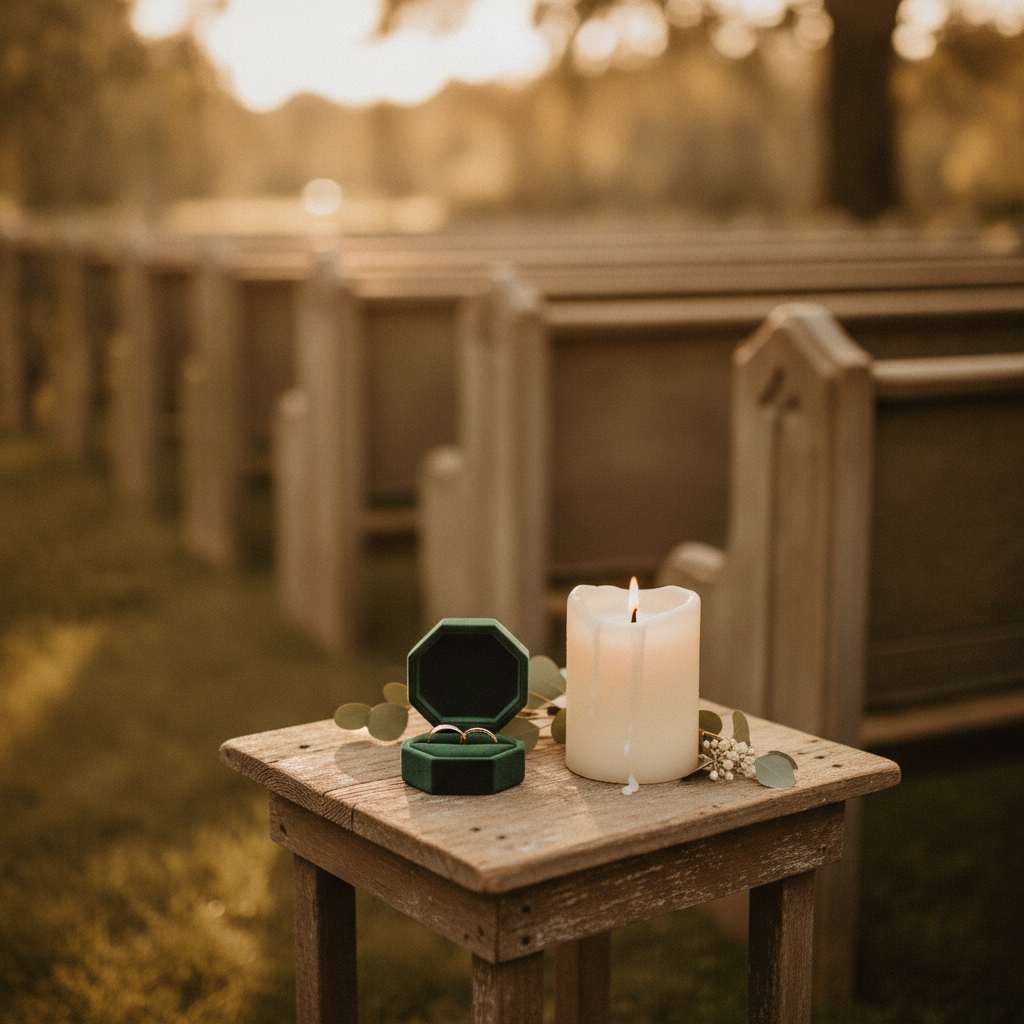
What Happens in a Typical 25-Minute Ceremony
It helps to see where the minutes actually go. Here is a common order for a non-religious ceremony.
- Guest seating: happens before the start time. Plan 20 to 30 minutes for guests to arrive and sit.
- Processional: 3 to 5 minutes. The wedding party walks in, then you.
- Welcome and opening words: 2 to 4 minutes.
- Readings: 2 to 3 minutes each.
- The officiant's message or your story: 4 to 8 minutes.
- Vows: 2 to 5 minutes, depending on whether you write your own.
- Ring exchange: 1 to 2 minutes.
- A unity ritual (optional): 2 to 4 minutes for a candle, sand, or handfasting.
- Pronouncement and the kiss: 1 minute.
- Recessional: 2 to 3 minutes.
Add those up and you get about 20 to 30 minutes. That's why it's the most common answer.
The benefit: once you see the pieces, you can choose which ones to keep. That's how you control the length.
What Makes a Ceremony Longer (or Shorter)
The length mostly comes down to a few choices. None of them are wrong. Just know what each one adds.
Readings and music
Each reading adds a few minutes. So does each song that plays all the way through. Two readings and a solo can add ten minutes on their own.
Personal vows
Written vows are lovely. They also run longer than repeat-after-me vows. Agree on a rough length with your partner, so one of you isn't reading a single sentence while the other reads a page.
Religious traditions
Communion, a Mass, or several cultural rituals add real time. They're often the heart of the service. Plan around them rather than trying to rush them.
A big wedding party
Ten bridesmaids and ten groomsmen take longer to walk in than two. The processional grows with every pair.
Unity rituals
A candle, sand, or handfasting adds a few quiet minutes. One ritual is plenty.
Speaking time
An officiant who tells your story can take five minutes or fifteen. Ask them how long they plan to speak.
A late start
This one doesn't change the ceremony itself. It changes everything after it. Guests stuck in parking, a missing boutonniere, or a slow photo session can push the start back ten or fifteen minutes. Build that cushion in from the beginning, and a late start stops being a crisis.
Weather outdoors
Wind can carry voices away, so readers slow down and repeat lines. Heat makes everyone want to hurry. If your ceremony is outside, plan for a microphone and keep the program a little shorter than you would indoors.
Your action: list every element you want in your ceremony. Next to each one, write a rough number of minutes. Add them up. That's your ceremony length.
How Long Should Your Wedding Ceremony Be?
Here is the truth: there's no right length. There's only the length that fits your day.
A few guidelines help, though.
- Shorter suits outdoor ceremonies in heat or cold. Guests are comfortable for about 20 to 30 minutes outside. Past that, sun and wind start to wear on people.
- Longer works when guests are comfortable. Shade, backs to lean on, and a clear view all help. Seating with full backs makes a longer service easier on older guests. Our ceremony seating guide walks through rows, aisle width, and family sections.
- Long religious services are expected. Guests attending a Mass or a traditional ceremony usually know what to expect.
If your ceremony is running long and you want to trim it, put it on a diet. Cut one reading. Pick one unity ritual. Ask the officiant for a shorter message. Keep your vows to a minute or two each.
Building the Ceremony Into Your Wedding Day Timeline
The ceremony is only part of the time you need to plan. The stretch before it matters just as much.
Before the ceremony
- Setup: your venue, seating, and decor need to be in place well before guests arrive. Confirm arrival times with each vendor in writing.
- Guest arrival: plan 20 to 30 minutes for guests to arrive, find a seat, and settle in.
- Wedding party lineup: about 10 to 15 minutes to gather everyone in order before the processional.
The ceremony itself
Use your own number from the list above. Then add 5 to 10 minutes of cushion. Something always runs a little late, and that's okay.
After the ceremony
- Receiving line (optional): this can take a long time with a big guest list. Many couples skip it and greet guests at their tables instead.
- Family photos: usually happen right after. Have a written list so nobody has to think.
- Moving to the reception: if guests are moving to a new space, give them a little time and clear directions.
A note on outdoor seating
If your ceremony is outdoors, the seats need to arrive and be set before anyone shows up. Ask your rental company when they deliver and when they collect, and put both times on your timeline.
If you're renting pews, our pew rental service includes delivery, placement, and teardown, so nobody in your family has to haul seats that morning. Our church pew rental guide explains how it works. We'll confirm delivery timing with you when you book.
Small Ways to Keep the Ceremony on Time
You don't need to run your ceremony like a train schedule. A few small habits keep it calm.
- Do a rehearsal. Walking through it once shows you exactly how long it takes.
- Print the order of service for your officiant and coordinator.
- Name one person to cue the music and the processional.
- Set the start time on invitations 15 minutes early, if your family runs late.
- Make the aisle easy to walk. A clear, wide aisle keeps the processional moving. Our wedding aisle ideas post has ways to style it.
Keep your sanity intact by handing these jobs to someone else. Your only job on the day is to show up.
Your Action
Pick just one task to complete today. Write out your ceremony order and put a rough number of minutes next to each part. You'll have your ceremony length in five minutes, and your timeline will fall into place around it.
If seating is still on your list, check pew availability for your date or get your instant estimate on our services page. It's an estimate only, and travel is figured separately. Planning for more than about 98 guests, or want to talk it through? Call us at (270) 903-5890.
FAQ: How Long Is a Wedding Ceremony?
How long is a typical wedding ceremony? Most wedding ceremonies last about 20 to 30 minutes. Civil ceremonies can be 10 to 15 minutes. Religious services with a Mass or many traditions can run an hour or longer.
How long is a Catholic wedding ceremony? Without a Mass, often about 30 to 45 minutes. With a full Mass, often 45 minutes to an hour or more. Ask your parish for exact timing.
How long should wedding vows be? About one to two minutes each is a comfortable length. That's roughly a short paragraph or two read slowly.
How early should guests arrive for a wedding ceremony? Ask guests to arrive 20 to 30 minutes before the start time. That gives everyone time to park, find a seat, and settle in.
Your wedding is a celebration, not a test. A short ceremony is just as real as a long one.